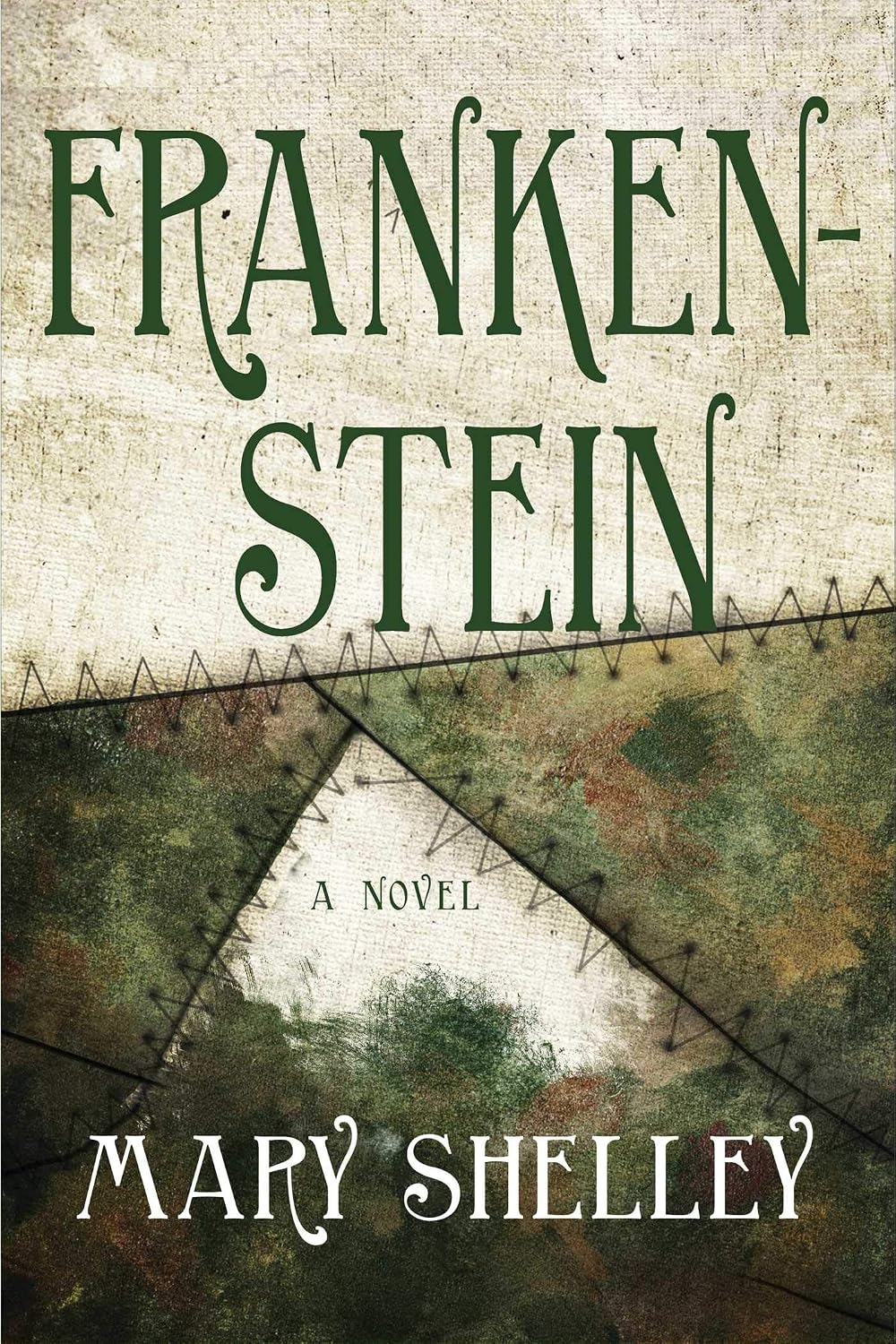
Frankenstein by Mary Shelly
A timeless, terrifying tale of one man’s obsession to create life—and the monster that became his legacy.
Mary Shelley began writing Frankenstein when she was only eighteen. At once a Gothic thriller, a passionate romance, and a cautionary tale about the dangers of science, Frankenstein tells the story of devoted science student Victor Frankenstein. Obsessed with discovering the cause of generation and life, and bestowing animation upon lifeless matter, Frankenstein assembles a human being from stolen body parts; but upon bringing it to life, he recoils in horror at the creature’s hideousness. Tormented by isolation and loneliness, the once-innocent creature turns to evil and unleashes a campaign of murderous revenge against his creator, Dr. Frankenstein.
Frankenstein, an instant bestseller and an important ancestor of both the horror and science-fiction genres, not only tells a terrifying story, but also raises profound, disturbing questions about the very nature of life and the place of humankind within the cosmos: What does it mean to be human? What responsibilities do we have to each other? How far can we go in tampering with Nature? In our age, filled with news of organ donation, genetic engineering, and bio-terrorism, these questions are more relevant than ever.
My Thoughts
Sunday Books: Frankenstein by Mary Shelley
This week’s Sunday Books selection is Frankenstein by Mary Shelley, a Gothic classic that has influenced horror and science fiction for generations.
Most people know the story of Frankenstein and his monster, but the original novel is about so much more than a scientist bringing a creature to life.
Victor Frankenstein becomes obsessed with discovering the secrets of life. When he finally succeeds, he is horrified by his creation and abandons him.
What follows is a tragic story of loneliness, rejection, and revenge.
I felt sorry for the monster.
He was brought into a world he never asked to be part of, only to be ostracized because of how he looked. He had no control over his appearance, no say in his creation, and no one to guide him through the world he suddenly found himself in.
He was judged before anyone truly got to know him.
That, to me, is one of the saddest parts of the story.
It also raises the question of who the real monster is. Is it the creature who eventually turns to violence, or the man who created him and then refused to take responsibility for his existence?
Frankenstein explores the consequences of obsession, the human need for acceptance, and the damage that rejection can cause.
Although it was written more than two centuries ago, its themes remain relevant. People are still judged for their appearances, excluded for being different, and sometimes treated cruelly simply because they don’t fit someone else’s expectations.
For me, the most haunting part of Frankenstein isn’t the creation of the monster.
It’s how the world treated him once he was alive.


